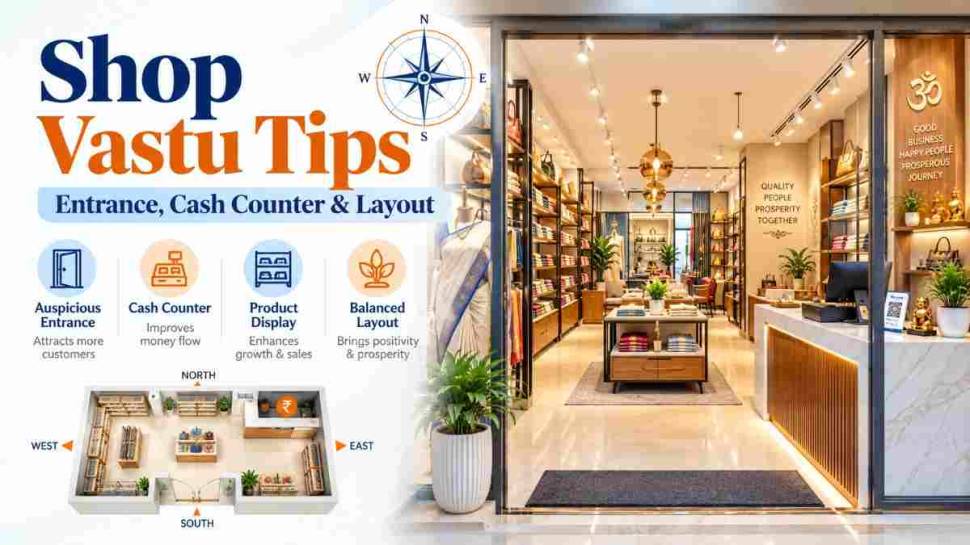
Are you opening a new retail shop or planning to renovate an existing showroom? Choosing the right location, arranging products, designing an inviting entrance, and positioning the billing counter are important decisions for any retail business. Alongside these practical considerations, many Indian shop owners follow Shop Vastu Tips to incorporate traditional Vastu Shastra principles into their commercial spaces.
According to traditional Vastu, the direction of a shop's entrance, cash counter, product displays, storage area, and owner's seating position may be considered when planning the layout. However, an effective shop design should also prioritize customer movement, product visibility, accessibility, safety, and everyday operational efficiency.
At Maarwall Kkarma, Dr. Riddhe Sshilpi provides Vastu consultancy for commercial properties, including retail shops, showrooms, offices, and other business premises. This guide explains common shop Vastu recommendations, practical layout ideas, and the changes business owners can consider without major renovation.
What Are the Most Important Shop Vastu Tips for Retail Businesses?
The most important Shop Vastu Tips include reviewing the main entrance direction, choosing a practical cash counter position, organizing product displays, planning stock storage, and keeping customer pathways clear. Traditional Vastu also considers the shop's orientation, owner's seating direction, and overall layout.
Here is a practical shop Vastu checklist:
- Main entrance: Check the entrance direction and ensure customers can enter comfortably.
- Cash counter: Select a secure position with clear visibility of the shop.
- Owner's seating: Consider traditional directional preferences alongside operational requirements.
- Product displays: Arrange merchandise for easy visibility and customer access.
- Heavy stock: Plan suitable storage areas without obstructing pathways.
- Lighting: Maintain bright, comfortable lighting throughout the store.
- Mirrors: Position mirrors to improve usability without creating confusing reflections.
- Entrance signage: Keep the shop name and branding clearly visible.
- Clutter: Remove unnecessary items from entrances and shopping areas.
- Safety: Maintain accessible exits and comply with applicable fire and building requirements.
For a property-specific evaluation, explore Commercial Vastu Consultancy for Shops and Showrooms at Maarwall Kkarma.
Which Entrance Direction Is Considered Best for a Shop According to Vastu?
North and east-facing entrances are traditionally considered favourable for retail shops in many Vastu Shastra interpretations. However, a south-facing or west-facing shop is not automatically unsuitable. The precise entrance position, property layout, surrounding environment, and business requirements should also be considered.
Traditional directional interpretations commonly include:
- North-facing entrance: Often associated with opportunities and prosperity in Vastu traditions.
- East-facing entrance: Traditionally associated with sunlight, renewal, and positive beginnings.
- West-facing entrance: May be considered suitable depending on the exact doorway position and floor plan.
- South-facing entrance: Requires a more detailed traditional assessment rather than automatic rejection.
Regardless of orientation, the entrance should be clean, accessible, well-lit, and visually welcoming. Avoid displaying merchandise in a way that blocks customers or creates congestion.
Shop entrance direction alone does not determine business success. Location, customer demand, product quality, service, and pricing remain important commercial factors.
Where Should the Cash Counter Be Placed According to Vastu?
According to common traditional Cash Counter Vastu recommendations, the cash counter is sometimes placed in the south, southwest, or west portions of a shop, with the cashier facing north or east. However, the preferred arrangement varies with the shop's layout and Vastu tradition.
When choosing a cash counter position, consider the following:
- The cashier should have a clear view of the entrance and shopping area where practical.
- Customers should be able to reach the billing counter easily.
- The counter should not block the main entrance or emergency exits.
- Cash drawers, payment terminals, and sensitive documents should be secure.
- The billing area should have adequate lighting and electrical connections.
- Customer queues should not obstruct product displays or pathways.
For small shops, placing the counter in a traditionally preferred direction may not always be feasible. In such cases, choose a secure and functional position before considering optional directional adjustments.
Which Direction Should a Shop Owner Face While Sitting?
Traditional shop Vastu often recommends that business owners face north or east while working at their desks or counters. These directions are symbolically associated with opportunities, clarity, and positive beginnings, although such effects are not scientifically established.
For a practical seating arrangement:
- Choose a position that provides visibility of staff and customers.
- Use comfortable seating for long working hours.
- Keep important documents and equipment accessible.
- Avoid blocking staff or customer movement.
- Maintain appropriate lighting and ventilation.
If the shop's fixed layout does not permit north-facing or east-facing seating, there is no need to make costly structural modifications solely for that preference.
How Should Products Be Arranged in a Shop According to Vastu?
Traditional shop Vastu sometimes recommends placing heavier merchandise toward the south or west and keeping the north or northeast comparatively open. However, effective product placement should primarily reflect customer shopping behaviour, product categories, visibility, and safe storage requirements.
For example, a clothing store, jewellery showroom, electronics shop, and grocery store need different display arrangements.
Useful merchandising practices include:
- Positioning frequently purchased products where customers can find them easily.
- Creating clear categories and logical shopping sections.
- Using appropriate shelving for heavy merchandise.
- Maintaining comfortable aisle widths.
- Displaying promotional products without blocking the entrance.
- Keeping fragile or expensive items in secure display areas.
A balanced retail layout can make the shopping experience easier and improve product accessibility, regardless of the traditional Vastu preferences adopted.
Where Should Heavy Stock and Storage Be Located in a Retail Shop?
According to common shop Vastu recommendations, the south, west, or southwest may be preferred for heavy stock and storage. In practice, the best storage location depends on shelving capacity, item weight, accessibility, inventory movement, and customer safety.
When planning stock storage:
- Keep heavy merchandise on suitable lower shelves.
- Use properly secured storage racks.
- Maintain access to frequently requested products.
- Separate fragile, flammable, or hazardous materials as required.
- Keep corridors and emergency exits unobstructed.
- Organize inventory to reduce unnecessary handling.
For businesses with limited floor space, efficient storage may be more practical than following a fixed directional arrangement. Retail safety and operational requirements should always take priority.
Where Should Mirrors Be Placed in a Shop According to Vastu?
Traditional Vastu often favours mirrors on north or east walls in certain commercial settings, but recommendations vary by property and intended use. In retail stores, mirrors should be positioned to support customers without producing glare, confusing reflections, or privacy concerns.
Mirror placement is particularly important for:
- Clothing boutiques and fashion stores.
- Jewellery showrooms.
- Beauty salons and cosmetic stores.
- Footwear shops.
- Home décor and furniture showrooms.
For fitting areas, customer comfort and privacy should determine the final placement. Avoid locations where mirrors interfere with movement or reflect strong lighting directly into customers' eyes.
Which Colours Are Recommended for Shops According to Vastu?
Traditional shop Vastu often suggests light, balanced colours such as white, cream, pale yellow, and soft green for certain retail spaces. However, colour selection should also reflect the brand identity, product category, available lighting, and customer experience.
For example:
- White and cream: Can create a clean, spacious appearance.
- Soft green: May provide a calm visual environment.
- Light yellow: Can introduce a warm and welcoming atmosphere.
- Neutral grey: Can suit modern electronics and premium retail interiors.
- Brand-specific accent colours: Can reinforce customer recognition and visual consistency.
There is no scientifically established evidence that a particular wall colour guarantees higher revenue. Choose colours that complement the products and make the shop easy to navigate.
How Should a Jewellery Shop or Clothing Showroom Follow Vastu?
A jewellery shop or clothing showroom can incorporate traditional Vastu preferences by reviewing its entrance, billing counter, display arrangement, storage, and customer seating areas. However, security, lighting, accessibility, and product presentation remain essential priorities for these businesses.
For jewellery showrooms:
- Use secure counters and display cabinets.
- Ensure jewellery is presented under appropriate lighting.
- Maintain visibility for staff and security systems.
- Provide comfortable consultation seating.
- Keep valuable stock in secure storage.
For clothing showrooms:
- Arrange merchandise by category, size, or collection.
- Provide clear routes between display racks.
- Keep fitting rooms accessible and private.
- Position mirrors where customers can use them comfortably.
- Maintain appropriate lighting and ventilation.
Every retail format has different requirements. A personalised Shop and Showroom Vastu Consultation can help owners consider traditional preferences within their existing floor plans.
What Should You Check Before Opening a New Shop According to Vastu?
Before opening a new shop, check the property's orientation, entrance position, cash counter layout, storage arrangements, customer movement, and signage. If traditional Vastu is important to you, reviewing these elements before finalising the interior design can make optional adjustments easier.
Use the following pre-opening checklist:
- Confirm the shop's legal commercial use and lease conditions.
- Check the main entrance direction.
- Review the available floor plan and dimensions.
- Identify a practical billing counter position.
- Plan product displays and customer pathways.
- Identify safe and accessible storage locations.
- Arrange electrical equipment and lighting.
- Review ventilation and fire safety requirements.
- Finalise signage and branding.
- Discuss any traditional Vastu preferences before installation begins.
For a new retail business, it is often more convenient to consider optional layout preferences during the planning stage rather than after installing permanent counters, partitions, and display fixtures.
Can You Apply Shop Vastu Remedies Without Demolition?
Yes, some traditional Shop Vastu Remedies Without Demolition may involve adjusting furniture, improving lighting, reorganising displays, changing decorative elements, and making better use of available space. These changes do not necessarily require structural renovation.
Potential non-structural improvements include:
- Removing unnecessary items near the entrance.
- Rearranging movable product displays.
- Adjusting the position of chairs and work desks.
- Improving lighting in dark corners.
- Organising stock and storage areas.
- Refreshing wall colours and signage.
- Maintaining a clean and welcoming shop environment.
These practical changes can improve organization and usability. However, traditional claims about their effects on prosperity or business outcomes are not scientifically proven.
For business owners who want to explore adjustments to an existing shop, Maarwall Kkarma provides Vastu Remedies and Corrections Without Demolition.
What Common Vastu Mistakes Should Shop Owners Avoid?
Common shop Vastu mistakes include judging a property solely by its entrance direction, copying generic online layouts, overcrowding the billing area, and making expensive changes without considering business operations. A property-specific approach is more practical than applying every traditional recommendation without evaluation.
Avoid these mistakes:
- Rejecting a shop based only on direction: Consider location, customer access, layout, and affordability.
- Placing the cash counter in an inconvenient position: Prioritize visibility, security, and customer movement.
- Blocking the entrance: Keep access routes clear.
- Overcrowding displays: Avoid reducing usable shopping space.
- Ignoring the shop's dimensions: Apply only adjustments that fit the actual layout.
- Making unnecessary structural changes: Check feasibility and approvals before renovation.
- Expecting guaranteed financial results: Vastu cannot replace effective retail management.
For further guidance about traditional arrangements in professional workplaces, read Vastu for Office Spaces in Mumbai.
When Should You Consult a Commercial Vastu Expert for Your Shop?
The ideal time to consult a commercial Vastu expert is before leasing, purchasing, designing, or renovating a retail property. Existing shop owners can also request an assessment when reviewing their present layout or planning interior modifications.
A consultation may be useful when:
- You are comparing multiple retail properties.
- You want to finalise the layout of a new shop.
- You are opening a showroom or boutique.
- You plan to relocate the billing counter.
- You are renovating an existing retail unit.
- You want traditional Vastu recommendations without major demolition.
Dr. Riddhe Sshilpi at Maarwall Kkarma provides commercial Vastu consultations for shops, showrooms, offices, and other workplaces. Her approach includes reviewing the property's orientation, available floor plan, and practical layout requirements.
Based in Vile Parle West, Mumbai, Dr. Riddhe has practised Vastu since 1999 and offers in-person and online consultation options.
What Documents Should You Share for a Shop Vastu Consultation?
For a shop Vastu consultation, share the commercial property's address, floor plan, compass orientation, and photographs. Details about the nature of the business, proposed billing counter, display areas, and storage requirements will also help the consultant understand the shop's functional needs.
Useful information includes:
- Shop floor plan with dimensions.
- Address and location of the property.
- Entrance direction and photographs.
- Business category and product types.
- Existing or proposed cash counter position.
- Product display and storage areas.
- Electrical equipment and utility locations.
- Any renovation or lease restrictions.
Providing accurate details can make a consultation more specific and help identify which traditional recommendations may be feasible.
What Are the Most Frequently Asked Questions About Shop Vastu?
Shop owners commonly ask which entrance direction is preferred, where to place the cash counter, whether a south-facing shop is suitable, and how to consider Vastu in a rented retail property. The answers below address these concerns directly.
Is a North-Facing Shop Good According to Vastu?
Yes, north-facing shops are traditionally considered favourable in many Vastu interpretations. However, the complete property layout should be reviewed, and the shop's direction alone does not guarantee business performance.
Is a South-Facing Shop Suitable for Business?
Yes, a south-facing shop can be suitable for business. Traditional Vastu assessments consider the precise entrance location and internal arrangement rather than automatically rejecting a shop because it faces south.
Which Direction Should a Cashier Face in a Shop?
Traditional Vastu recommendations commonly suggest that a cashier face north or east. However, the actual seating direction should also support customer service, security, billing operations, and comfortable working conditions.
Can Vastu Be Applied to a Small Retail Shop?
Yes, small retail shops can consider traditional Vastu preferences through entrance organization, furniture positioning, lighting, and product arrangement. Available space and customer accessibility should guide the final layout.
Can You Follow Shop Vastu in a Rented Property?
Yes. Rented retail properties can incorporate selected Vastu preferences without changing structural elements. Movable displays, furniture arrangement, lighting, and storage organization are often easier to adjust, subject to lease conditions.
Can You Get an Online Shop Vastu Consultation?
Yes. A commercial property can often be reviewed remotely using an accurately oriented floor plan, photographs, and a video walkthrough. Certain properties may require an in-person site inspection depending on their complexity.
Does Following Shop Vastu Guarantee Higher Sales?
No. There is no reliable scientific evidence that following shop Vastu guarantees higher sales, profits, or customer numbers. Retail success depends on factors such as products, pricing, location, customer experience, marketing, and business operations.
How Can You Book a Shop Vastu Consultation in Mumbai?
You can enquire about a Shop Vastu Consultation in Mumbai through Maarwall Kkarma by sharing your shop's location, floor plan, entrance direction, and main concerns. Dr. Riddhe Sshilpi provides commercial Vastu guidance for new and existing retail shops, showrooms, and other business premises.
Whether you are opening a boutique, planning an electronics showroom, renovating a jewellery store, or reorganising a small retail business, a property-specific consultation can help you explore traditional layout preferences within your space and budget.
Planning to open or redesign your shop? Visit Maarwall Kkarma's Commercial Vastu Consultancy page or call +91 99303 10251 to enquire about a consultation with Dr. Riddhe Sshilpi.
Disclaimer: Vastu Shastra is a traditional approach to spatial planning. Its claimed effects on prosperity, financial growth, or business performance are not scientifically established. Vastu guidance should not replace qualified architectural, engineering, fire safety, legal, or financial advice.