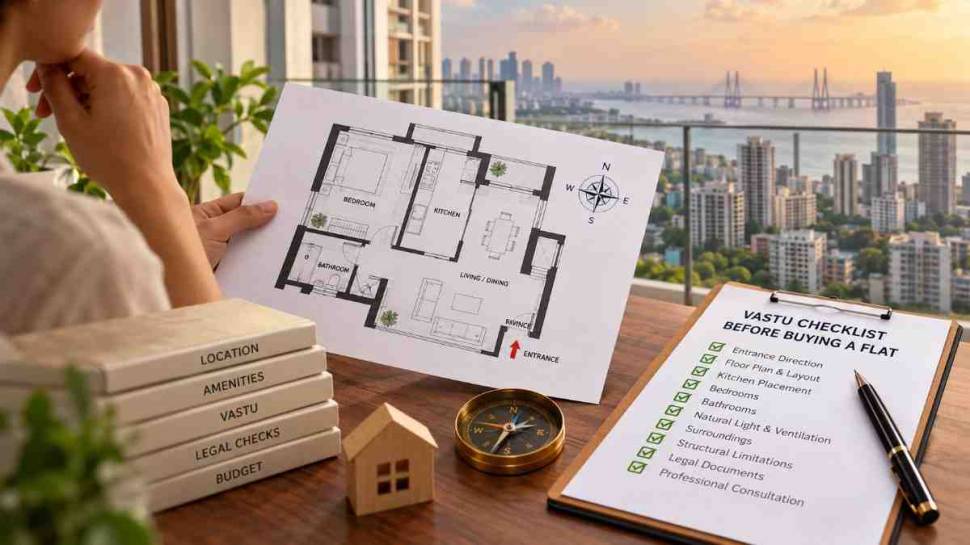
Are you planning to buy a new flat in Mumbai but unsure whether the property follows traditional Vastu principles? Buying a home is a major financial commitment, and selecting the right apartment involves more than comparing prices, locations, and amenities. Many homebuyers also consider Vastu Shastra before buying a flat to understand the property's direction, entrance, room layout, and overall design.
A practical Vastu checklist before buying a flat can help you review important property features, compare shortlisted apartments, and identify layout concerns before making a booking decision. Rather than relying on a single direction or general Vastu rule, it is better to evaluate the complete floor plan alongside legal, structural, and lifestyle considerations.
At Maarwall Kkarma, Dr. Riddhe Sshilpi offers property-specific Vastu consultancy for flats, apartments, and residential properties. This guide provides a practical checklist to help Mumbai homebuyers prepare for property visits, assess builder floor plans, and understand when a professional Vastu review may be useful.
What Should You Check Before Buying a Flat According to Vastu?
Before buying a flat according to Vastu, check the main entrance direction, property shape, kitchen placement, bedroom locations, bathroom positions, natural light, ventilation, and surrounding environment. These are commonly reviewed elements in traditional residential Vastu. However, property safety, legal documentation, and everyday functionality should remain essential parts of the decision.
Use this practical flat-buying checklist during property inspections:
- Main entrance: Identify the exact entrance direction using a reliable compass.
- Floor plan: Review the apartment's shape, dimensions, and room distribution.
- Kitchen: Check the location, ventilation, and practical cooking arrangement.
- Master bedroom: Review its location, privacy, and available space.
- Bathrooms: Examine placement, drainage, ventilation, and accessibility.
- Balconies and windows: Assess sunlight, airflow, and outside views.
- Surroundings: Check nearby buildings, roads, noise, and obstructions.
- Structural limitations: Identify walls, shafts, and fixed services that cannot easily be changed.
- Legal documents: Verify approvals, ownership details, and applicable property records.
- Professional assessment: Consider reviewing the shortlisted property before paying a substantial non-refundable amount.
For detailed pre-purchase guidance, explore Property Vastu Consultation Before Buying a Flat or Plot offered by Maarwall Kkarma.
How Can You Check the Main Entrance Direction of a Flat Before Buying?
To check a flat's main entrance direction, stand inside the apartment facing outward through its main door and use a compass to identify the direction. The entrance of the individual flat should be assessed separately from the main entrance of the residential building.
Traditional Vastu often associates north, east, and northeast-facing entrances with favorable qualities. However, an apartment facing another direction is not automatically unsuitable. The precise entrance position and overall property layout also matter within Vastu traditions.
During the inspection:
- Identify the flat's main entrance rather than relying solely on the building entrance.
- Use a reliable compass and check for possible magnetic interference.
- Confirm the orientation against the floor plan.
- Check whether the entrance is well-lit and easily accessible.
- Ensure the doorway is not obstructed by electrical equipment, furniture, or common-area restrictions.
Do not reject an otherwise suitable apartment based only on a broad directional assumption. A complete residential layout review provides more useful context.
How Should You Review a Builder's Floor Plan for Vastu?
Review a builder's floor plan by marking the north direction, identifying the main entrance, and locating the kitchen, bedrooms, toilets, balconies, and utility areas. A correctly oriented floor plan helps determine whether the property aligns with your preferred traditional Vastu guidelines before purchase.
Ask the builder for a floor plan that includes:
- Accurate room dimensions.
- Entrance and window locations.
- Clearly marked compass orientation.
- Positions of kitchens, bathrooms, and service shafts.
- Balconies and utility spaces.
- Structural columns and walls.
- Information about the floor and apartment number.
If the plan does not clearly show north, request clarification rather than guessing the direction from the drawing.
A builder's plan can be useful for an initial Vastu assessment, although an on-site review may provide additional information about the actual property and surrounding environment.
Which Flat Layout Features Should You Check Before Paying the Booking Amount?
Before paying a booking amount, check which flat features are fixed and which can be modified. The most important items include structural walls, entrance position, kitchen plumbing, bathroom shafts, ventilation, and room dimensions. Identifying these limitations early helps avoid unexpected renovation expenses.
For example, changing the position of a bed or study desk is usually easier than moving a bathroom or main entrance.
Use these questions during your property visit:
- Can the internal furniture layout be changed easily?
- Are there fixed plumbing and electrical shafts?
- Does the builder permit any customization before possession?
- Are the room dimensions suitable for your family?
- Will proposed changes require society or building approval?
- Can your preferred Vastu arrangements be accommodated without major construction?
If a property has traditional Vastu concerns, request a realistic explanation of possible adjustments before committing to expensive alterations.
How Can You Evaluate Natural Light and Ventilation in a New Flat?
Evaluate natural light and ventilation by visiting the flat at different times, checking window orientation, and observing whether neighbouring buildings obstruct sunlight or airflow. While traditional Vastu gives importance to natural light and open spaces, these features also have practical implications for indoor comfort.
Mumbai apartments can vary significantly in daylight exposure depending on their floor level, building orientation, and surrounding development.
During an inspection, check:
- Whether living areas receive useful daylight.
- Whether bedrooms have adequate ventilation.
- Whether bathrooms have appropriate exhaust systems.
- Whether balconies are blocked by nearby buildings.
- Whether the flat experiences excessive heat or humidity.
- Whether windows create unwanted noise or privacy concerns.
A higher-floor apartment is not automatically better in every situation. Evaluate light, ventilation, safety, accessibility, and personal preferences together.
What Should You Check in the Kitchen and Bathrooms Before Buying a Flat?
Before purchasing a flat, check the kitchen and bathroom locations, plumbing arrangements, ventilation, waterproofing, and maintenance accessibility. Traditional Vastu commonly associates the southeast with kitchens and the west or northwest with certain bathroom placements, but the complete property layout should be considered.
For the kitchen, review:
- Available cooking and preparation space.
- Exhaust and ventilation arrangements.
- Electrical and gas connection safety.
- Storage and countertop usability.
- Water supply and drainage.
For bathrooms, review:
- Drainage and waterproofing condition.
- Ventilation or exhaust systems.
- Signs of dampness or leakage.
- Plumbing accessibility.
- Comfortable access from bedrooms and living areas.
When purchasing an existing apartment, bathroom and kitchen relocation may be restricted by structural design and society regulations. Such changes should never be undertaken without appropriate technical assessment and permissions.
What Should You Check When Buying an Under-Construction Flat in Mumbai?
When buying an under-construction flat in Mumbai, review the approved layout, proposed apartment orientation, construction stage, permitted modifications, and expected possession details. For Vastu purposes, early review may identify layout preferences while certain design decisions are still open.
Ask the developer:
- Is the apartment floor plan final and approved?
- Does the plan show the correct north direction?
- Can any internal non-structural changes be requested?
- Are kitchen and bathroom service locations fixed?
- Will the delivered apartment match the supplied plan?
- What are the terms for customization or cancellation?
Also verify the project's applicable Maharashtra RERA registration and details through the official regulatory process, along with necessary legal documentation.
Traditional Vastu considerations should complement these checks rather than substitute for builder verification or legal due diligence.
How Can You Compare Two Flats Using a Vastu Checklist?
To compare two flats using a Vastu checklist, evaluate both apartments against the same criteria, including entrance direction, room layout, natural light, ventilation, fixed structural limitations, and practical usability. Record the results side by side instead of choosing a property based on one favourable direction.
For example, use this comparison format:
| Inspection Factor | Flat A | Flat B |
|---|---|---|
| Entrance direction verified | Yes / No | Yes / No |
| Floor plan available | Yes / No | Yes / No |
| Preferred room arrangement | Suitable / Review | Suitable / Review |
| Natural light | Good / Limited | Good / Limited |
| Ventilation | Good / Limited | Good / Limited |
| Major layout changes required | Yes / No | Yes / No |
| Budget and legal checks | Complete / Pending | Complete / Pending |
This table is a comparison worksheet, not a scientifically validated Vastu score. It can help buyers organize information before discussing the shortlisted options with a consultant.
Maarwall Kkarma's Property Vastu service includes reviewing shortlisted properties and comparing their plans before purchase.
What Vastu Mistakes Should You Avoid While Shortlisting Flats?
The biggest mistake is rejecting or selecting a flat solely because of its facing direction. Other common mistakes include relying on inaccurate compass readings, ignoring structural restrictions, overlooking practical living conditions, and assuming that every traditional Vastu concern requires demolition.
Avoid these common errors:
- Checking only the entrance: Review the complete apartment layout.
- Relying on online generalizations: Traditional Vastu recommendations vary with property-specific details.
- Ignoring building conditions: Check safety, ventilation, maintenance, and accessibility.
- Overlooking modification costs: Determine whether suggested changes are technically possible.
- Confusing symbolic remedies with guaranteed results: No Vastu arrangement guarantees wealth, health, or success.
- Skipping legal verification: Vastu consultation does not replace property due diligence.
Homebuyers looking for more general directional guidance can read Real Vastu Tips for Buying a Flat.
Can Vastu Concerns Be Addressed After Purchasing a Flat?
Yes, some traditional Vastu concerns may be addressed after buying a flat through furniture rearrangement, improved lighting, changes in room usage, or other non-structural adjustments. However, not every perceived Vastu issue has a practical remedy, and structural modifications may involve considerable costs or restrictions.
For an existing apartment, possible adjustments include:
- Rearranging furniture to improve movement and usability.
- Making the entrance more organized and accessible.
- Improving lighting in darker areas.
- Reviewing the location of desks and sleeping arrangements.
- Reducing unnecessary clutter.
- Using available rooms more effectively.
To explore traditional adjustments for existing properties, visit Vastu Remedies Without Demolition.
When Should You Book a Vastu Consultation Before Buying Property?
The most useful time to book a Vastu consultation before buying property is after shortlisting suitable flats but before making a final financial commitment. This provides an opportunity to compare layouts, discuss possible adjustments, and understand any traditional Vastu concerns while alternatives remain available.
A pre-purchase consultation may be especially useful when:
- You are comparing two or three shortlisted apartments.
- You are buying an under-construction flat.
- The main entrance direction is unclear.
- The property has an unusual floor plan.
- You want to understand possible adjustments before renovation.
- You are considering a resale apartment with a fixed layout.
Dr. Riddhe Sshilpi at Maarwall Kkarma provides property-specific Vastu guidance for residential buyers. Her consultancy considers floor plans, directions, room placement, and feasible adjustments.
What Documents Should You Share for a Pre-Purchase Vastu Consultation?
For a pre-purchase Vastu consultation, share the apartment floor plan, property location, known compass direction, and available photographs. When comparing multiple flats, provide the details for each option so the consultant can evaluate them consistently.
A useful document checklist includes:
- Builder floor plan or resale property layout.
- Building and apartment location.
- Flat number and floor number.
- North direction, if marked on the drawing.
- Photographs of the entrance and rooms.
- Information about proposed modifications.
- Booking deadline or decision timeline.
- Your main questions about the property.
Maarwall Kkarma also offers Residential Vastu Consultancy for homeowners and buyers seeking traditional guidance on apartment and house layouts.
What Are the Most Common Questions About a Flat Vastu Checklist?
Homebuyers commonly ask whether Vastu is necessary before buying a flat, how to assess an apartment floor plan, and whether a property with some Vastu concerns should be rejected. The following answers address these questions directly.
Is a Vastu Check Necessary Before Buying a Flat?
No, a Vastu check is not a legal or technical requirement for buying a flat. It is an optional traditional assessment for buyers who value Vastu Shastra. Legal verification, structural safety, affordability, and practical suitability remain essential.
Can You Check Vastu Using Only a Builder's Floor Plan?
Yes, an initial traditional Vastu assessment can often be performed using an accurately oriented builder's floor plan. A site visit may provide additional information about entrance directions, neighbouring structures, and actual physical conditions.
Should You Reject a Flat With Some Vastu Concerns?
No, a flat with some traditional Vastu concerns is not automatically unsuitable. Evaluate the complete layout, feasibility of adjustments, price, location, and other property characteristics before deciding.
Can You Get an Online Vastu Consultation Before Buying a Flat?
Yes, online consultations can be suitable for reviewing floor plans and shortlisted residential properties. Photographs, videos, and accurate directional information help the consultant understand the apartment remotely.
Should You Check Vastu Before Paying a Token Amount?
If traditional Vastu considerations are important to your buying decision, reviewing the property before paying a substantial or non-refundable token amount can be useful. Always understand the builder's or seller's cancellation and refund terms before paying.
Is Vastu Different for a 1BHK, 2BHK, and 3BHK Flat?
The broad traditional principles may be similar, but their practical application differs depending on available space, room distribution, and structural limitations. A compact 1BHK may offer less flexibility for rearrangement than a larger apartment.
Can Vastu Determine Whether a Flat Will Bring Financial Success?
No. There is no reliable scientific evidence that a flat's direction or Vastu arrangement determines financial success. Vastu Shastra is a traditional spatial planning system, and its interpretations should not be treated as guarantees of personal or financial outcomes.
How Can You Book a Property Vastu Consultation Before Buying a Flat in Mumbai?
You can book a Property Vastu Consultation in Mumbai through Maarwall Kkarma by sharing your shortlisted property's floor plan, location, and specific questions. Dr. Riddhe Sshilpi provides property assessments for buyers who want to review traditional Vastu considerations before finalizing a residential purchase.
With Vastu practice dating back to 1999, Dr. Riddhe Sshilpi offers consultations from Vile Parle West, Mumbai, including site visits across Mumbai, Thane, and Navi Mumbai, along with online consultations for clients elsewhere.
Whether you are buying your first apartment, comparing resale properties, or selecting a flat in an under-construction project, a pre-purchase review can help you understand relevant traditional Vastu preferences and potential layout adjustments.
Planning to buy a new flat? Visit Maarwall Kkarma's Property Vastu Consultation page or call +91 99303 10251 to enquire about reviewing your shortlisted property with Dr. Riddhe Sshilpi.
Disclaimer: Vastu Shastra is a traditional system of spatial planning. Its claimed effects on personal well-being, prosperity, or financial outcomes are not scientifically established. A Vastu assessment should complement, not replace, legal, structural, financial, or technical advice when purchasing property.